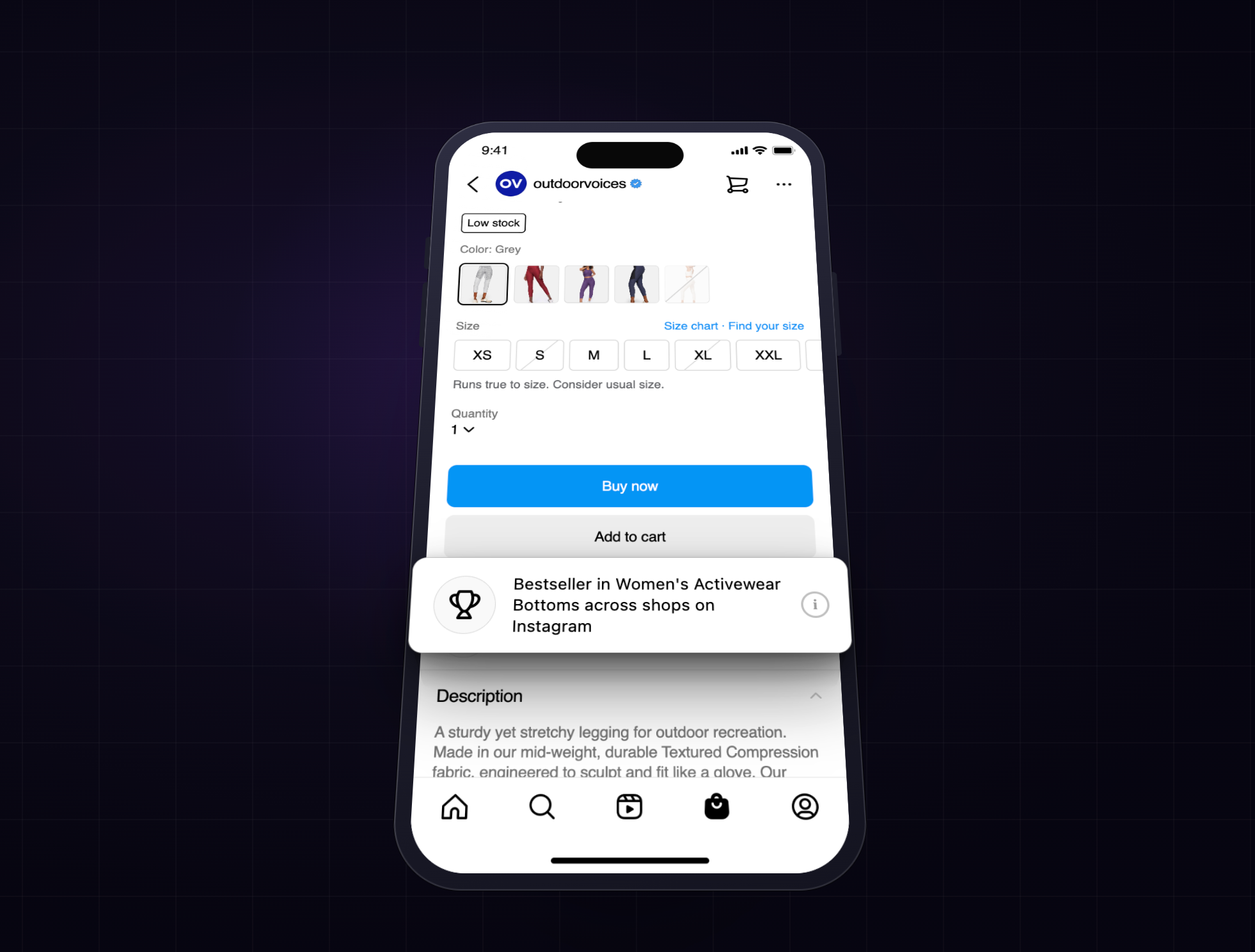
A best-seller framework for the Shops buying experience
Objective
Create a product ranking framework throughout the Shops experience, giving shoppers a trustworthy signal of what is worth buying.
User need
"I want to know if this product is good and trusted — and that I'm getting the best product in a category without spending a lot of time comparing."
Business need
Increase buyer confidence, resulting in higher conversion rates from product views to purchases.
Standing on what we already knew
Audited how product categories differ across FB and IG Shops — IG's taxonomy is far richer, raising the question of whether ranking data could be shared across platforms.
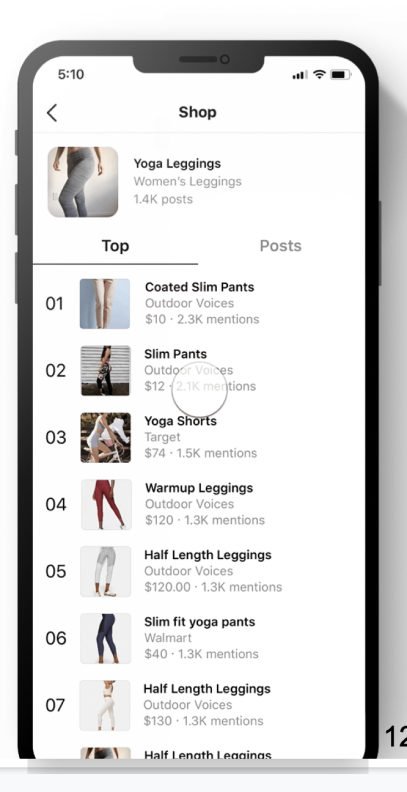
Revisited past explorations: Community Rank, which leans on real users to consolidate relevant products, was consistently participants' favorite owing to its low effort and usefulness.
Framed the open questions with the team: how ranking is defined (metrics, data points, legal, seller support), where the message fits in the buyer journey, whether tags can be searched or filtered, and how sellers ranked below #1 would feel.
"The list of products shows the most popular products, builds authenticity and trust. However, ranking based only on mentions and shares is less interesting — the mentions might be from people who dislike the product."
— Research participant, prior Community Rank study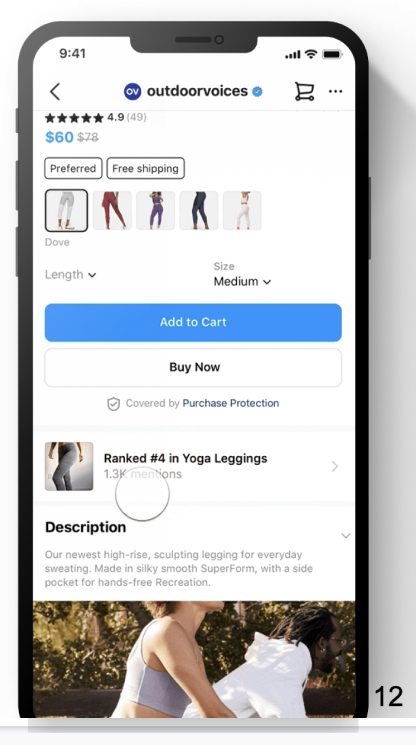
Earning a place in the hierarchy
The PDP is one of the densest surfaces in Shops — every element already fights for attention. Before adding anything, we mapped the existing hierarchy top to bottom and asked where a best-seller signal could support the purchase decision without competing with imagery, price, or the CTA.
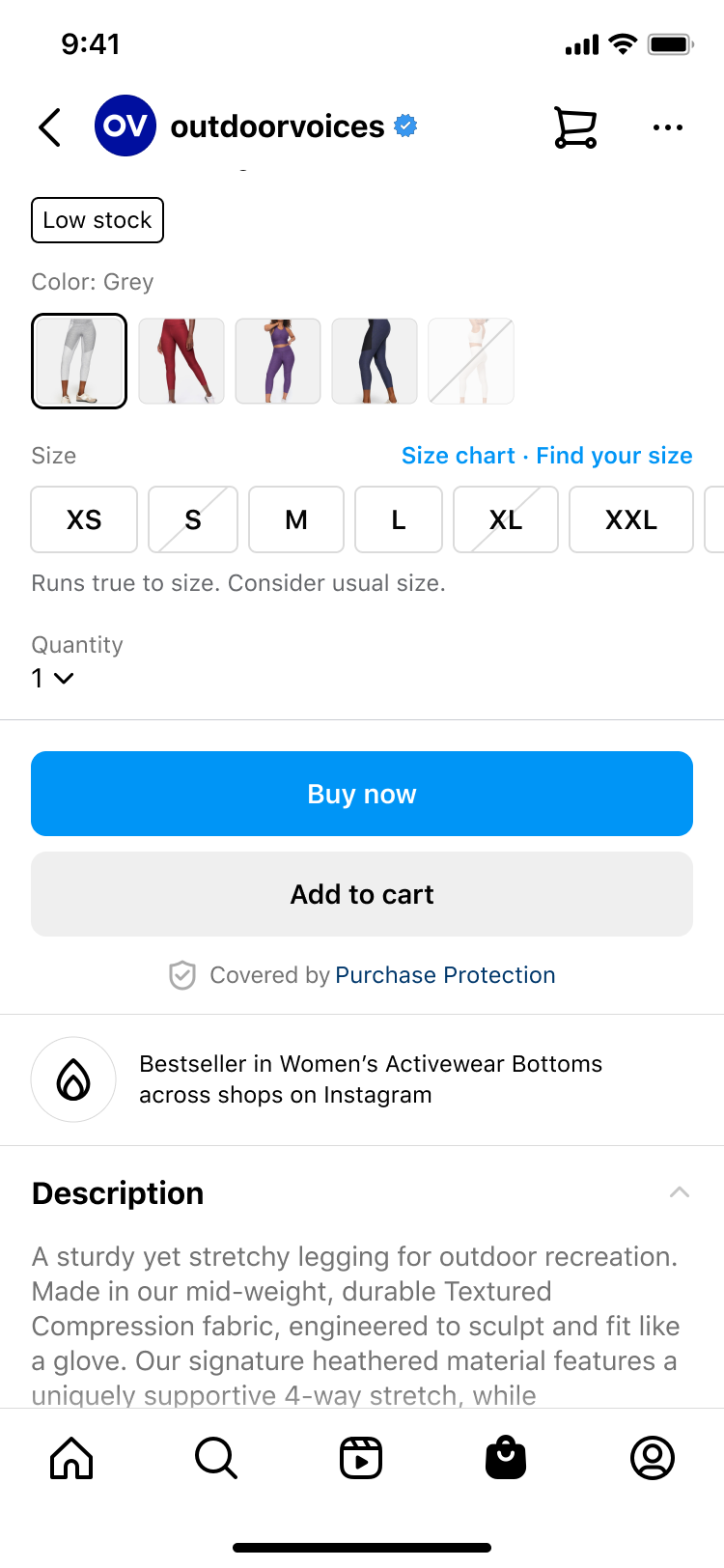
Brand & navigation
Orientation only — kept at the lowest visual weight so the product stays the star.
Merchandising tags
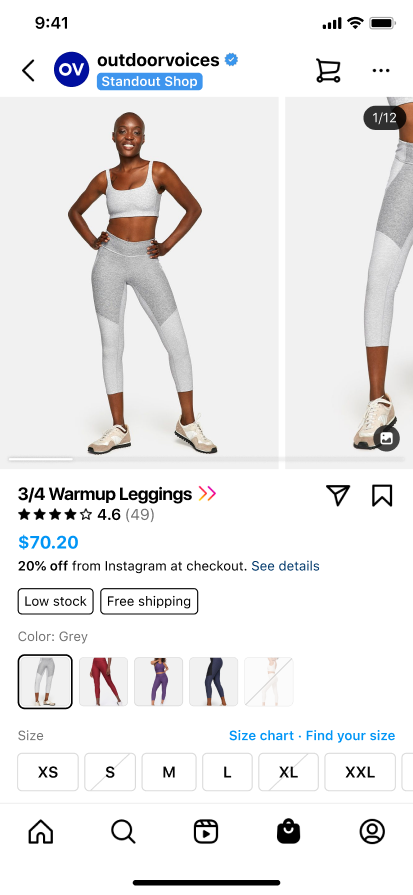
Urgency signals like "Low stock" live as small chips: informative, but never loud enough to compete with price or CTA.
Product imagery
The hero of the page. A hard constraint for us: no new element could sit on or near the imagery.
Selection controls
Color, size, fit note, and quantity — the decision inputs, sequenced before the moment of commitment.
CTA pair
Buy now / Add to cart is the conversion moment. Anything added above it risks delaying the tap, so this zone stayed untouchable.
Trust zone
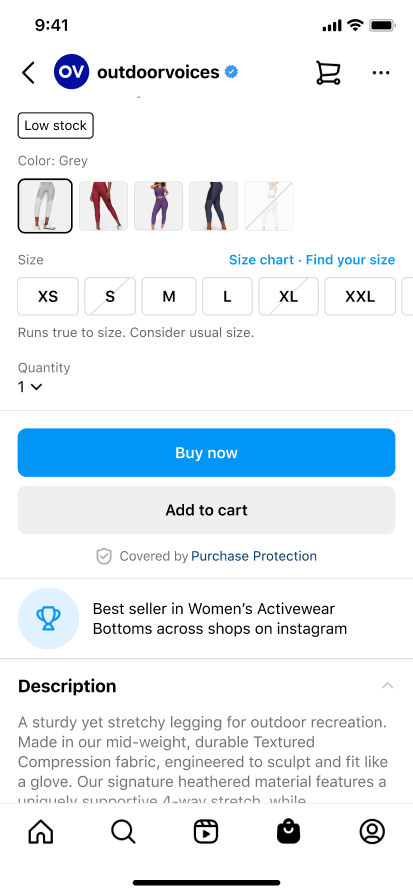
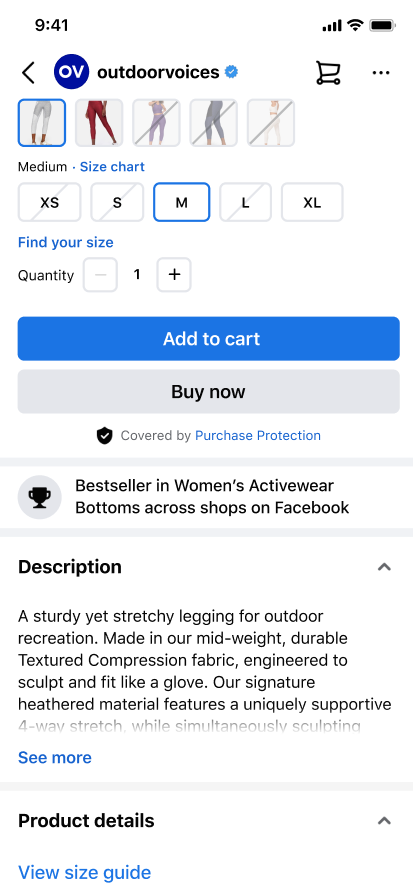
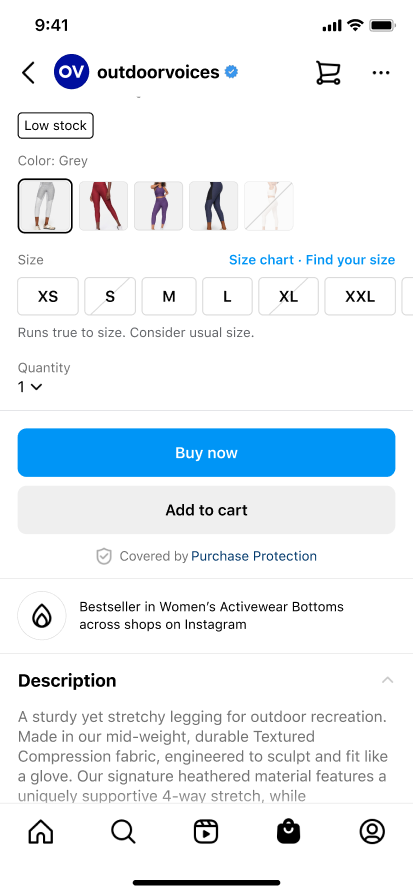
Purchase Protection already lived directly below the CTA. This is where the Best Seller badge earned its slot — reinforcing confidence exactly at the point of decision without interrupting the purchase path.
Description & details
Progressive disclosure for shoppers who need more convincing — collapsed by default to keep the page scannable.
Going broad across the buyer journey
I explored how a best-seller signal could show up at every stage — badges on the PDP, inline treatments, ARTS labels, a dedicated ranking section, and a ranking bottom sheet — mapping entry points from ads, storefronts, and organic shop discovery. Team reviews surfaced two key risks: a full ranked list could navigate shoppers away to a competing shop, and sellers ranked below #1 would likely push back. That led to our core hypothesis: surface only the #1 "Best seller" signal.
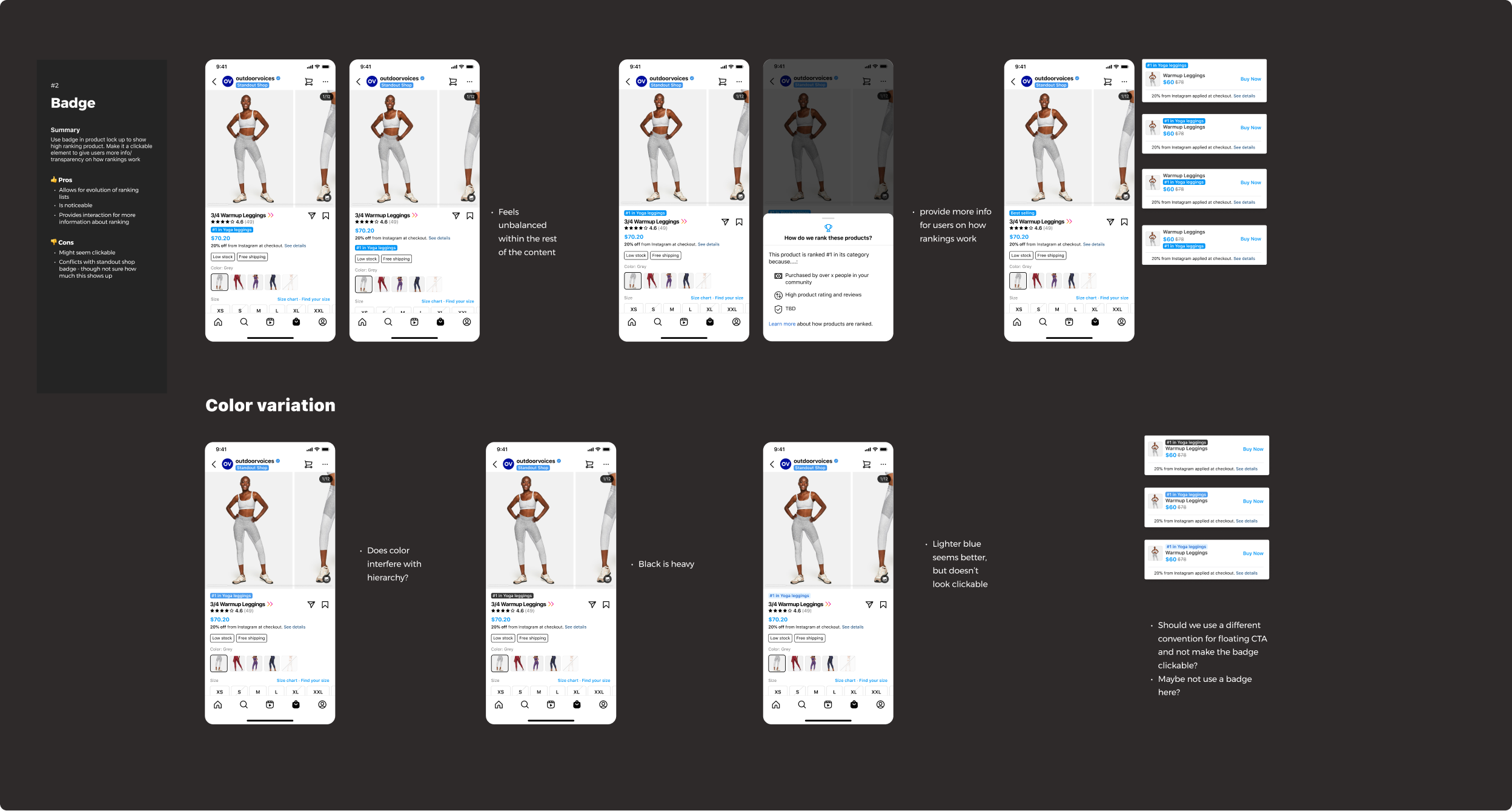
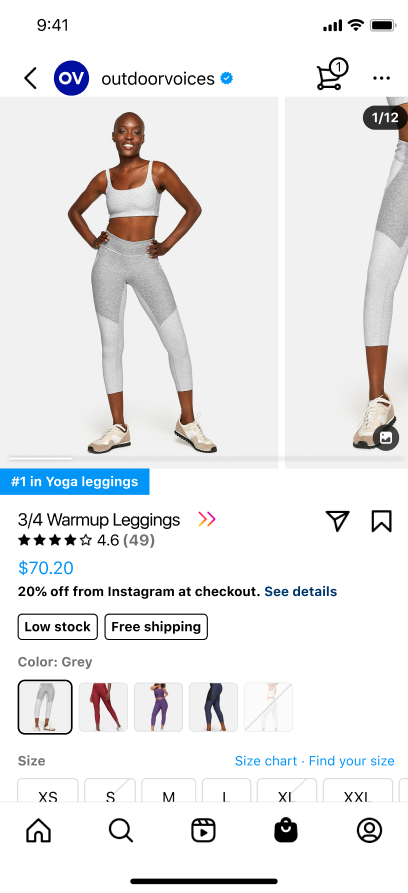
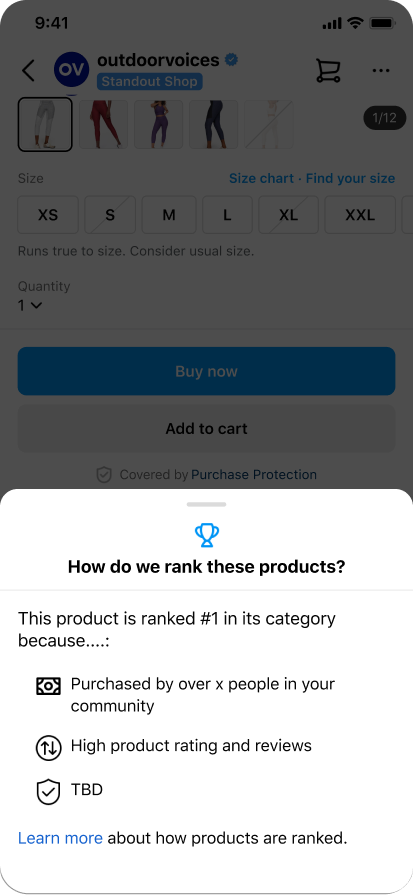
Clickable vs. non-clickable
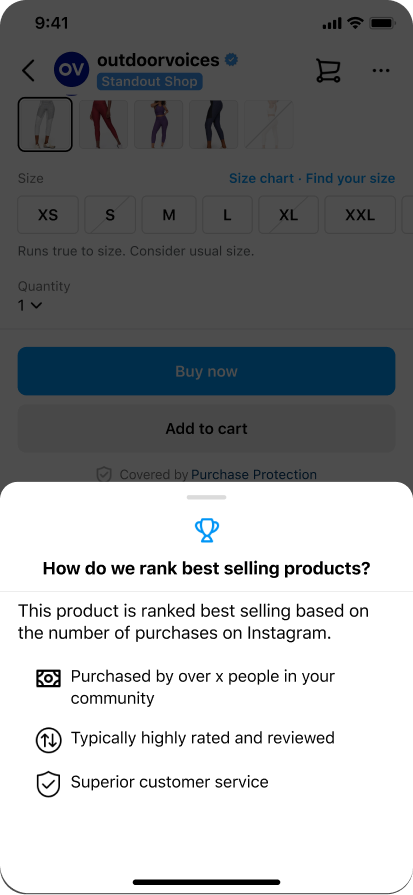
The strongest directions split into two families. Clickable treatments paired the badge with a "How do we rank best-selling products?" bottom sheet — explaining the signal through purchases in your community, ratings and reviews, and customer service. Non-clickable treatments kept the badge as a pure trust signal with nothing to tap. Working with content design, we pressure-tested placements above the CTA, below the CTA, and inside the product lockup.
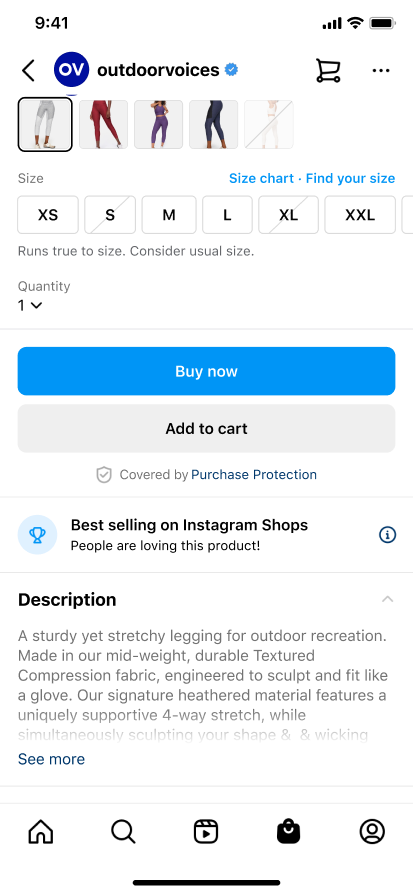
Converging on the badge
We converged on the non-clickable badge: a lightweight trust signal above the product description that never risks navigating a shopper away mid-purchase. The direction was reviewed with Legal, brought to the Instagram design system team for a dedicated asset, and scoped to work across all of Instagram — not just within Shops.
Two production-ready components
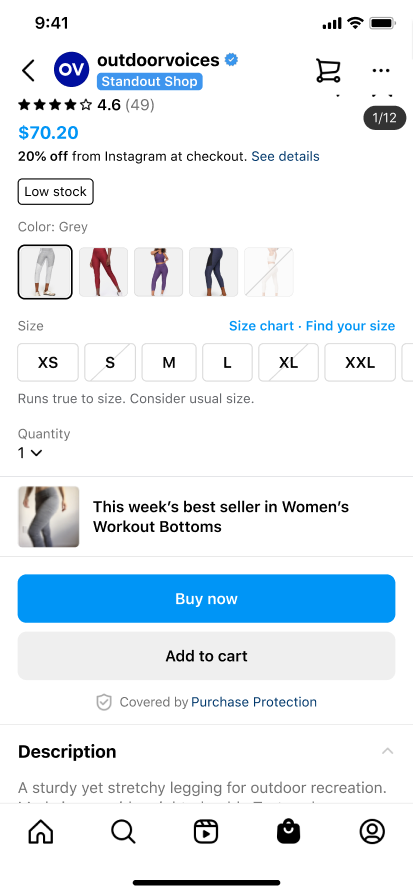
The final hand-off delivered two components: the PDP Best Seller List Item for Facebook and the PDP Best Seller Banner for Instagram — each badge reading "Bestseller in Women's Activewear Bottoms across Shops," specced in light and dark modes with full PDP context. Open questions for the design system team (existing component fit, badge iconography, award color) were documented alongside.




In experiment
Where it stands
The Best Seller badge shipped to experiment across FB and IG PDPs. Success is measured against the original business need: increased buyer confidence driving higher conversion to purchase.
What I learned
A trust signal doesn't need interaction to work — restraint (one badge, no list, no tap) resolved the seller-sentiment, legal, and navigation-risk concerns that sank earlier explorations.
What's next
Read experiment results, then expand the framework to other touchpoints explored in concept gen: product tiles, product lockup, and sticky CTA — and revisit aggregated ranked lists.